
I remember the first time a shop floor supervisor showed me a part that required drilling holes at awkward angles. The team had spent hours flipping the workpiece, resetting fixtures, and still ended up with tolerances that barely passed inspection. That frustration is common in machining. A Winkelbohrspindel changes the game by letting you reach those difficult spots without constant repositioning.
If you work with CNC machines, you know the pressure to hold tighter tolerances while keeping cycle times low. This tool delivers exactly that advantage. In this post, I will walk you through what a Winkelbohrspindel is, why it matters for precision work, how to use it effectively, and real ways it solves daily problems in the shop.
What Is a Winkelbohrspindel?
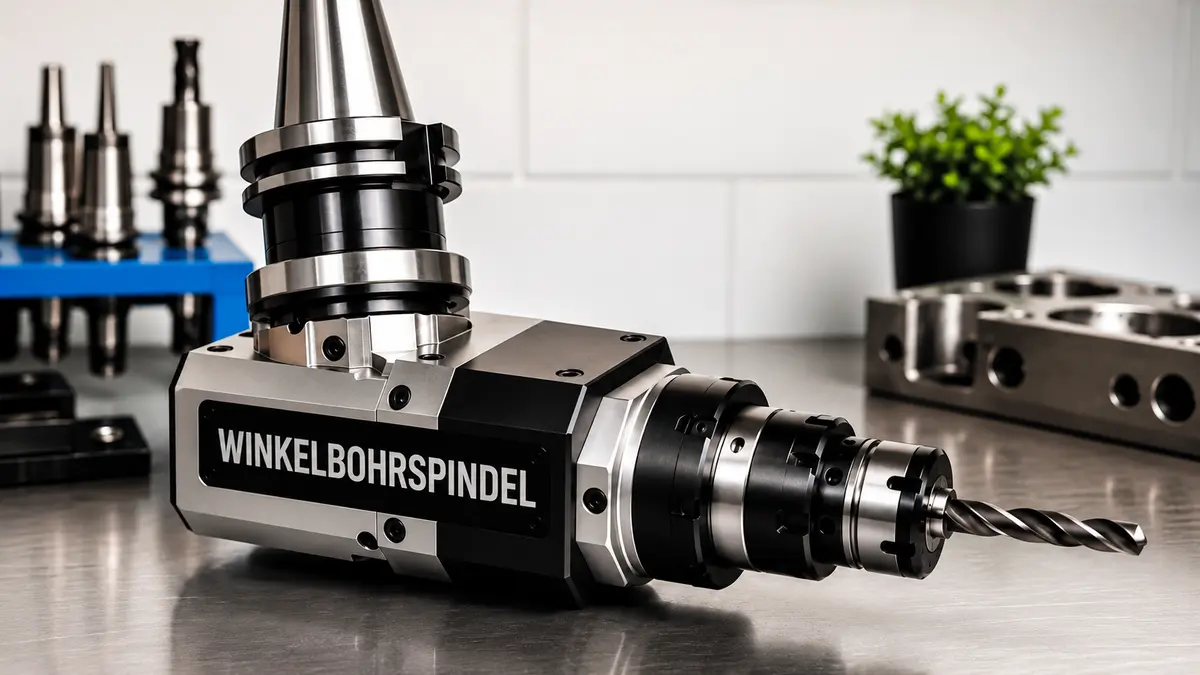
A Winkelbohrspindel is an angled drilling spindle, most often designed at 90 degrees, that attaches to your CNC machine’s main spindle. It redirects the rotational force so you can drill, tap, or mill on side faces, inside corners, or recessed areas without rotating the entire part.
German engineering terms like this one describe specialized tools built for reliability. These units transmit power through bevel gears or similar mechanisms that maintain accuracy even under load. Unlike standard spindles that operate straight down or along one axis, the Winkelbohrspindel gives access to features that would otherwise need multiple setups.
I have seen operators waste time and material trying to jury-rig solutions with extended tools or custom fixtures. The Winkelbohrspindel removes that improvisation. It becomes a standard part of the tool magazine or quick-change setup for shops that handle complex geometries.
Why Precision Matters More Than Ever in Machining
Modern parts demand tolerances measured in microns. Aerospace components, medical implants, automotive housings — they all share one requirement: every hole and surface must align perfectly. Small errors compound quickly and lead to scrapped parts or field failures.
Traditional approaches create risks. Every time you unclamp and flip a workpiece, you introduce potential misalignment. Thermal expansion, fixture wear, and operator variation add up. A Winkelbohrspindel keeps the part fixed in one position while the tool handles multiple orientations. This single-setup approach directly improves repeatability and reduces variation.
I once worked with a manufacturer making gearbox casings. Before adopting angled spindles, they averaged 8% scrap on a particular run due to hole position drift after repositioning. After integrating a Winkelbohrspindel, that rate dropped below 1%. The consistency let them tighten tolerances and win more contracts.
Key Benefits of Using a Winkelbohrspindel
Reduced Setups and Faster Cycle Times You machine multiple faces in one clamping. That cuts non-cutting time dramatically. What used to take three operations now happens in one.
Better Accuracy and Repeatability The workpiece stays put. Reference datums remain constant, so hole positions and perpendicularity stay true to the original coordinate system.
Access to Restricted Areas Deep pockets, narrow channels, and internal features become reachable. This capability opens design possibilities that engineers previously avoided because of manufacturing constraints.
Lower Tool Wear and Better Surface Finish Properly applied force through the angled spindle often results in smoother cutting action compared to long-reach tools that can flex or chatter.
Cost Savings Over Time Fewer setups mean less fixture wear, lower labor hours, and reduced scrap. The initial investment pays back through higher throughput and quality.
These advantages show up clearly in high-mix, low-volume shops as well as dedicated production lines. The flexibility helps both environments.
Types of Winkelbohrspindel Units
Not every angled spindle works the same way. Shops choose based on their machine type, part size, and required operations.
Fixed 90-Degree Models These provide the most common right-angle access. They excel at side drilling and tapping on vertical machining centers. Many include coolant-through capabilities for better chip evacuation.
Adjustable Angle Versions Some Winkelbohrspindel designs allow you to set angles other than 90 degrees. These give extra versatility when parts have compound features.
Compact and Heavy-Duty Options Smaller units fit tight machine envelopes or smaller tool changers. Larger, more robust models handle heavier milling loads or tougher materials like titanium and hardened steels.
Modular Systems These let you swap heads or extensions depending on the job. Quick-change interfaces reduce downtime when moving between part families.
When selecting a Winkelbohrspindel, consider your spindle RPM limits, torque requirements, and the clearance needed around the workpiece. Matching the tool to your machine’s capabilities prevents performance issues later.
How to Integrate a Winkelbohrspindel into Your CNC Workflow
Successful use starts with proper planning. Here is how experienced operators approach it.
Programming Considerations You need to account for the offset created by the angled head. Most modern CAM systems have templates or post-processor adjustments for right-angle heads. Pay close attention to coordinate rotations and work offsets.
I recommend running a test program on scrap material first. Verify that the tool path clears all fixtures and clamps. Collision detection in simulation software saves headaches.
Setup and Alignment Mount the Winkelbohrspindel securely and use the machine’s spindle orientation features if available. Some heads require a drive key or stop block to prevent the housing from rotating. Check runout carefully — even small deviations affect hole quality at angle.
Tool Selection Short, rigid tools perform best. Long extensions defeat the purpose of the angled spindle by introducing flex. Use high-quality carbide drills and taps designed for the material.
Coolant and Chip Management Angled operations can trap chips more easily. Through-spindle coolant or directed nozzles make a big difference. Plan your peck cycles to clear chips effectively, especially in deep holes.
Safety First Always verify clearances at slow feed rates. The redirected forces can surprise operators new to these tools. Train your team on proper handling and storage because these precision units need protection when not in use.
Real-World Applications Across Industries
Aerospace Turbine blades, structural brackets, and landing gear components often have features on multiple faces. A Winkelbohrspindel allows machining these in one setup while maintaining the critical alignments required for flight safety.
Automotive Engine blocks, transmission cases, and suspension parts benefit from precise cross-drilling and tapping. Reduced setups help maintain high production rates with consistent quality.
Medical Device Manufacturing Implants and surgical instruments demand flawless surfaces and exact hole positions. The stability of a single-setup approach with a Winkelbohrspindel supports these strict requirements.
Mold and Die Making Cooling channels and ejector pin holes frequently need angled access. The tool helps create complex mold geometries faster and more accurately.
General Job Shop Work Even simpler parts gain efficiency. A valve body or bracket that once required four setups might now run in two. That difference improves quoting competitiveness.
One shop owner I know specializes in prototype work for electronics enclosures. He credits his Winkelbohrspindel with cutting lead times by nearly 40% on certain jobs because he no longer waits for custom fixtures.
Maintenance and Longevity Tips
Like any precision tool, a Winkelbohrspindel needs care to deliver consistent performance.
- Clean the unit after every use, especially around gear interfaces.
- Check grease levels according to the manufacturer’s schedule.
- Monitor runout regularly and address any increase immediately.
- Store it in a protective case away from chips and moisture.
- Avoid exceeding recommended torque or RPM limits.
Following these steps extends service life and maintains the accuracy that justifies the investment.
I have seen neglected angle heads lose effectiveness within a year. Shops that treat them as valuable assets get years of reliable service instead.
Common Challenges and How to Overcome Them
Vibration and Chatter Angled setups can sometimes transmit forces differently. Use conservative feeds and speeds at first, then optimize. Rigid tool holders and balanced tools help.
Programming Complexity New users often struggle with coordinate transformations. Invest in training or work with your CAM provider for customized posts. Once you have a working template, repeating the process becomes routine.
Machine Compatibility Not every CNC has the right spindle orientation or clearance. Check specifications carefully before purchase. Many suppliers offer evaluation units or detailed drawings.
Cost Justification For smaller shops, the upfront price can seem high. Calculate your current setup times and scrap rates. Most users see payback within six to twelve months through increased capacity alone.
Choosing the Right Winkelbohrspindel for Your Shop
Consider these factors:
- Your primary machine type (vertical, horizontal, 5-axis)
- Typical part sizes and materials
- Volume and variety of work
- Available tool changer space
- Budget and expected ROI timeline
Talk to suppliers who understand your specific challenges. The best Winkelbohrspindel solutions come from matching the tool to real production needs rather than buying the most advertised option.
The Future of Angled Machining Tools
CNC technology continues to advance. Machines with more axes and better spindle controls make angled operations even more seamless. Winkelbohrspindel designs are evolving too, with lighter materials, improved sealing, and integrated sensors for condition monitoring.
Shops that adopt these tools now position themselves well for increasingly complex work. Customers expect faster delivery and higher quality. Tools like the Winkelbohrspindel help meet those expectations without adding headcount or floor space.
Final Thoughts on Precision Machining with Winkelbohrspindel
After years in and around machine shops, I have learned that the right tooling transforms frustration into confidence. A Winkelbohrspindel does exactly that for angled features. It lets you focus on making good parts instead of fighting the limitations of standard setups.
If you struggle with multi-sided parts, excessive setups, or tolerance issues on angled holes, this tool deserves serious consideration. Start by evaluating one or two jobs where repositioning currently costs you time and accuracy. Run the numbers. The results often speak for themselves.
Have you used a Winkelbohrspindel in your shop? What challenges did you solve with it? Share your experiences in the comments. I read every one and often pick up new tips from fellow machinists.
For more useful articles, visit my website: Gulmagazine.co.uk.