
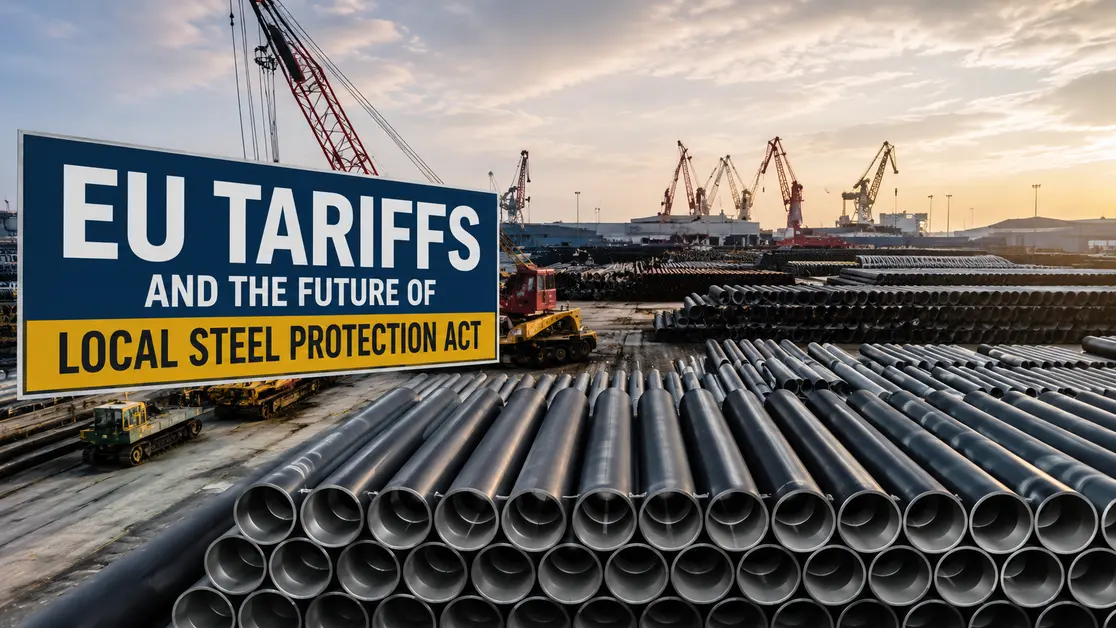
Hey there, if you’ve been following the news about manufacturing or trade lately, you’ve probably heard the buzz around steel. As someone who’s spent years talking to folks in factories, supply chains, and even small businesses that rely on reliable materials, I can tell you this topic hits close to home for a lot of us. The EU’s recent moves on tariffs aren’t just some distant policy decision—they’re about keeping jobs in communities that have built their lives around steel production for generations.
Let me share a quick story. A few years back, I chatted with a steelworker from a mid-sized town in Germany whose family had worked in the mills for three generations. He talked about the pride in producing the strong, quality steel that goes into cars, bridges, and wind turbines. But he also mentioned the constant worry about cheap imports flooding the market, undercutting local prices, and threatening shifts. That conversation stuck with me. Today, with the EU stepping up its game through new tariff measures and what we can call the push for a Local Steel Protection Act framework, there’s real hope mixed with some tough questions ahead.
In this post, we’ll walk through the background, the specifics of these EU tariffs, how they aim to safeguard local production, and what the future might hold. We’ll keep it straightforward—no jargon overload—and focus on the real-world side of things.
The Struggles Facing the EU Steel Sector Today
Europe’s steel industry has been through a lot. Production levels have dropped significantly from peaks in the early 2000s, with output hovering around 140 million tonnes in recent years compared to much higher figures before. High energy costs, global competition, and the push toward greener manufacturing have all played a part.
Think about it: steel isn’t just metal—it’s the backbone of so many things we take for granted. Cars rolling off assembly lines, infrastructure projects building new roads, and renewable energy setups like wind farms all need it. When local mills struggle, it ripples out to suppliers, transporters, engineers, and families in towns across Germany, Italy, Poland, France, and beyond.
The industry supports hundreds of thousands of direct jobs and millions more indirectly. Workers worry about layoffs when mills slow down or close. Communities feel the hit when a major employer scales back—local shops see fewer customers, schools face changes, and that sense of stability fades. I’ve heard from people who describe it as watching a way of life erode slowly because of unfair competition from places with much lower costs and fewer rules.
Global overcapacity makes this worse. Countries like China produce far more steel than their domestic markets need, and the excess often finds its way to Europe at prices that local producers can’t match sustainably. Add in energy prices that are two to three times higher in Europe than in some competitor nations, and you see why mills have been operating below full capacity.
This is where the conversation around protecting local steel gets urgent. It’s not about shutting out the world entirely but about creating fair conditions so European producers can compete and invest in the future.
Understanding the New EU Tariffs and the Local Steel Protection Push
In October 2025, the European Commission put forward a significant proposal to replace the existing temporary steel safeguards (set to end in mid-2026) with a more permanent framework. This is essentially the heart of what many refer to in discussions as advancing a Local Steel Protection Act approach—measures designed specifically to shield domestic industry from unfair global pressures.
Key elements include:
- Cutting tariff-free import quotas sharply: Bringing the duty-free volume down to about 18.3 million tonnes per year—a roughly 47% reduction from previous levels. This is based on older market reference points to better reflect fairer conditions.
- Raising tariffs on excess imports to 50%: Imports above the quotas now face this higher duty, up from the previous 25%. It’s a strong signal to deter flooding the market with unsustainable volumes.
- Melt and Pour requirements: New traceability rules to make sure steel is genuinely from declared origins and to prevent circumvention through rerouting or mislabeling.
- Focus on WTO compliance: Unlike some unilateral approaches elsewhere, the EU frames this as aligned with international rules, aiming to address structural overcapacity issues.
The UK has introduced similar measures effective from July 2026, with even steeper quota cuts in some cases, showing a broader trend in Europe toward prioritizing local steel resilience.
From my perspective, talking to industry contacts, this feels like a necessary response after years of temporary fixes. The old safeguards helped during spikes, like when U.S. tariffs diverted flows, but they weren’t built for the long haul. This new setup aims to give breathing room for mills to invest, especially in decarbonization technologies.
How These Changes Connect to Decarbonization and Green Steel
One of the smartest angles here is tying protection to the green transition. European steelmakers are already leaders in trying to cut emissions—steel accounts for a notable chunk of industrial CO2. But switching to electric arc furnaces, hydrogen-based processes, or other low-carbon methods costs serious money and requires stable demand.
Without protection from cheap, high-carbon imports, companies hesitate to invest because they risk losing market share. The Local Steel Protection efforts create space for that shift. Public procurement rules favoring low-carbon steel, combined with these trade measures, can help build demand for cleaner production right here.
Imagine a steelworker I know in the process of retraining for new green tech roles. He told me the uncertainty was the hardest part—will the mill still be there in five years? Policies like these tariffs signal commitment, which can encourage younger people to stay in or join the sector. It’s about preserving skills and building new ones for a sustainable future.
Of course, it’s not perfect. Critics point out potential higher costs for downstream users like carmakers or construction firms. But the hope is that a healthier local industry leads to more reliable supply chains and innovation that eventually brings costs down.
Broader Economic and Global Trade Implications
Let’s talk about the bigger picture. These EU tariffs don’t happen in isolation. They’re part of a response to worldwide dynamics, including U.S. policies under different administrations and massive overproduction elsewhere.
For European businesses, the upside includes higher capacity utilization—aiming toward 80% or better—which means more stable operations and potential for reinvestment. Exporters from the EU might face pushback in negotiations, but the measures also open doors for dialogue on global overcapacity.
On the consumer side, there could be some price effects in the short term for goods using steel. A family buying a new car or appliances might notice it indirectly. That’s a real concern, and policymakers need to watch it closely. But long-term, supporting local production can mean fewer disruptions from volatile global markets and stronger economies in steel-dependent regions.
I’ve spoken with small business owners who supply parts to steel users. One guy running a fabrication shop said the constant threat of cheap imports made planning impossible. With more predictable local supply, he feels he can hire with confidence and bid on bigger projects.
Addressing Concerns and Potential Drawbacks
No policy is without trade-offs, and it’s fair to discuss them openly. Some worry this shifts toward more protectionism overall, potentially sparking retaliatory moves from trading partners. Higher input costs for industries that import steel components could pressure margins.
Transparency and regular reviews (the proposal includes evaluations every few years) will be key. Exemptions for certain partners like Norway or limited ones for Ukraine show it’s not a blanket wall. The focus remains on tackling unfair practices rather than isolating.
From an emotional standpoint, for workers who’ve seen plants idle or face uncertainty, these measures offer relief. But for families in import-heavy sectors, clear communication about mitigations—like support programs or phased adjustments—matters a lot.
The Road Ahead: Opportunities and What Needs to Happen Next
Looking forward, the success of these EU tariffs and the Local Steel Protection framework will depend on implementation. Fast-tracking adoption, pairing with energy cost relief, and investing in innovation are crucial.
We could see more alliances, perhaps with like-minded countries, to tackle global overcapacity together. On the domestic front, supporting workers through training, ensuring communities benefit from green investments, and keeping supply chains robust will make the difference.
I remember visiting a mill area where old facilities were being upgraded with modern, cleaner tech. The mix of old-timers mentoring newer hires on both traditional skills and new processes was inspiring. It reminded me that industry evolution doesn’t have to mean loss—it can mean renewal when given the right conditions.
For readers in affected regions, this is a chance to engage. Contact local representatives, support businesses that source responsibly, and stay informed. For everyone else, understanding these policies helps us see how trade decisions shape daily life—from the price of goods to the strength of our economies.
Why This Matters to All of Us
At the end of the day, steel policy isn’t abstract. It’s about people keeping good-paying jobs, communities holding onto their economic anchors, and Europe maintaining the industrial base needed for everything from defense to clean energy transitions.
The EU Tariffs and the direction of Local Steel Protection efforts represent a pragmatic step in a complicated world. They acknowledge that free trade works best when it’s fair trade, with rules that prevent dumping and allow responsible producers to thrive.
If you’re in the industry, facing these changes in your work, or just curious about how policy affects manufacturing, I’d love to hear your thoughts in the comments. What worries you most, or where do you see the biggest opportunities?
This isn’t the final chapter—it’s an ongoing story. By focusing on local strengths while adapting to global realities, there’s a solid path to a stronger, greener steel sector. Let’s keep the conversation going and support the workers and innovations that will get us there.
For more useful articles, visit my website: Gulmagazine.co.uk.