
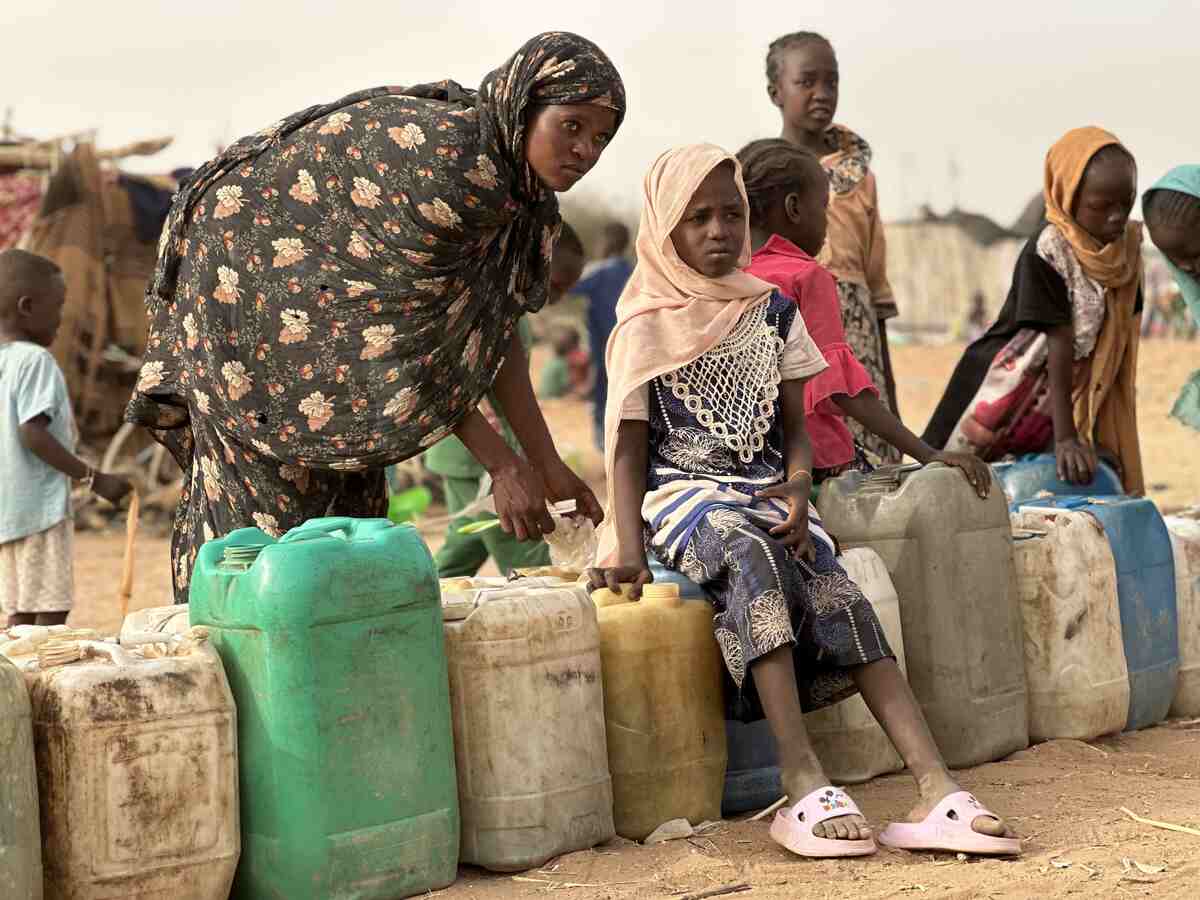
You probably scroll past a lot of news about faraway conflicts, and I get it. Life keeps us busy. But every time I check updates on the Sudan Crisis, the numbers stop me cold. Over 33 million people – that is more than half of Sudan’s entire population – now need urgent help just to survive. Fourteen million have been forced from their homes. Famine has taken hold in parts of the country, and disease spreads where clean water and medicine have run out. This is not some distant problem. The Sudan Crisis has become the largest humanitarian disaster anywhere on Earth right now, and it has been building for three full years since fighting broke out in April 2023.
I have followed global events for years, and what strikes me about the Sudan Crisis is how ordinary families got caught in a fight between two powerful generals. The pain feels personal because it could happen anywhere power struggles replace basic governance. In this post, we will walk through exactly what led to the Sudan Crisis, the human toll it has taken, why aid groups call it the worst of its kind, and what practical steps make sense for anyone who wants to help. No hype, just the facts and the real stories that show why this matters.
What Sparked the Sudan Crisis
The Sudan Crisis did not start overnight. Sudan spent decades under Omar al-Bashir’s rule until a popular uprising in 2019 pushed him out. People hoped for a fresh start with civilian leaders sharing power with the military. Instead, in October 2021, two generals staged a coup and took control together. Abdel Fattah al-Burhan led the Sudanese Armed Forces, the regular army. Mohamed Hamdan Dagalo, better known as Hemedti, commanded the Rapid Support Forces, a powerful paramilitary group that grew out of earlier militias in Darfur.
For a while, Burhan and Hemedti worked as allies. They both wanted influence over Sudan’s resources, especially gold mines that bring in big money. Tensions grew over how to merge the Rapid Support Forces into the national army and who would hold real power during the planned transition to civilian rule. On April 15, 2023, those tensions exploded into open fighting in Khartoum and other cities. What began as a clash between two armed groups quickly turned into a nationwide war that neither side has been able to win.
Three years later, the Sudan Crisis shows no sign of ending. Battles continue in Khartoum, Darfur, and Kordofan. Both sides have used heavy weapons in crowded neighborhoods, and civilians pay the price every single day. The fighting has wrecked roads, hospitals, and markets. Farmers cannot plant crops safely. Trucks carrying food get stopped or looted. That is how a political power grab became a full-blown humanitarian catastrophe.
The Human Toll of the Sudan Crisis
Numbers alone never tell the full story, but in the Sudan Crisis they paint a grim picture. Fourteen million people have fled their homes since the fighting started. Around nine million remain inside Sudan as internally displaced people, living in makeshift camps or crowded with relatives. Another 4.4 million have crossed borders into Chad, South Sudan, Egypt, and other neighboring countries. No other conflict today has displaced so many people at once.
Hunger has spread fast. More than 21 million Sudanese face acute food shortages. In some areas of North Darfur and South Kordofan, famine conditions have been officially confirmed. Families report surviving on one meal a day, often just sorghum porridge or whatever they can forage. Children show signs of severe malnutrition. Aid workers describe scenes where parents bring weak, listless kids to feeding centers that lack enough supplies.
Disease adds another layer of suffering. Cholera has hit every one of Sudan’s 18 states. Malaria, dengue, and measles spread where people crowd together without clean water or vaccines. Health facilities have been hit more than 200 times during the fighting. Doctors and nurses have been killed, injured, or forced to flee. Basic treatments for anything from childbirth to chronic illness have become rare.
Violence against civilians continues too. Reports document killings, sexual assaults, and looting by fighters from both sides. Ethnic tensions that go back decades have resurfaced in Darfur, adding targeted attacks to the general chaos. Over 40,000 people have died directly from the fighting, according to conservative United Nations counts, but many experts believe the real toll, including deaths from hunger and disease, is far higher.
What hits hardest when you read accounts from the ground is how quickly normal life disappeared. A teacher in Khartoum who once sent kids to school now worries about finding clean water. A farmer in Darfur who grew millet for his family now watches his fields lie empty because fighting makes planting too dangerous. These are not abstract victims. They are parents, students, shopkeepers, and grandparents whose daily routines got ripped away by a war they did not choose.
Why the Sudan Crisis Stands Out as the Worst Humanitarian Disaster
People sometimes ask me why the Sudan Crisis gets labeled the world’s worst when other conflicts also make headlines. The answer lies in the sheer scale combined with how little attention it receives. The number of people needing aid – 33.7 million in 2026 – tops every other emergency on the planet. The displacement figure alone beats any single crisis today.
Compare that to the funding reality. The United Nations appeal for Sudan in 2026 asked for $2.8 billion to reach the most urgent cases. As of April, it sits at roughly 15 percent funded. That gap means fewer food rations, fewer medical kits, and fewer safe routes for aid trucks. In other major crises, donor governments and the public respond faster. With the Sudan Crisis, the world has looked away too often.
Children bear an especially heavy burden. More than half of the displaced are kids. Many have missed years of school. Some have lost parents to the fighting or to disease. Aid groups note rising cases of acute malnutrition among the youngest, which can cause lifelong health problems even if they survive the immediate crisis.
The Sudan Crisis also affects entire regions. Neighboring countries that took in refugees already struggle with their own challenges. Chad and South Sudan host hundreds of thousands of Sudanese who need shelter, food, and medical care. The strain ripples outward, but the core problem remains inside Sudan where fighting blocks most solutions.
Stories from People Living Through the Sudan Crisis
Let me share a few accounts that stayed with me. One woman I read about fled El Fasher in North Darfur after months of siege. She carried her two young children on foot for days, hiding from gunfire and avoiding roads controlled by armed groups. When she reached a camp, she learned her husband had been killed in crossfire weeks earlier. She now spends her days searching for enough food to keep her kids from wasting away. Her story is one of thousands.
Another account comes from a nurse in a displacement site near Kadugli. She described treating children for cholera in a tent with no running water. Families arrived every day with the same symptoms: vomiting, diarrhea, and severe dehydration. She and her small team worked around the clock with limited supplies, knowing that each untreated case could spread to dozens more. She told interviewers she keeps going because “if we stop, who will help them?”
A father from Khartoum shared how his family survived the first year of fighting by sheltering in their apartment as shells landed nearby. When the water and electricity failed, they joined the exodus. He left behind a small business he had built over fifteen years. Now in a camp, he worries most about his teenage son’s future. School is gone, and the boy spends days helping collect firewood instead of learning.
These are not isolated cases. They repeat across the country in different accents and settings, but the themes stay the same: loss, fear, and the daily struggle to keep children alive.
Barriers That Keep Aid from Reaching People in the Sudan Crisis
Several factors make the Sudan Crisis especially hard to address. First, active fighting blocks roads and airports. Aid convoys need permission from both sides, and that permission often comes late or not at all. Second, the two main factions have split the country into rival zones, each with its own rules and checkpoints. Third, funding shortages force aid groups to prioritize the most extreme cases and leave others waiting.
Local Sudanese volunteers have stepped up through community networks and emergency response rooms, distributing what little they have. Their courage deserves recognition, yet they cannot replace the large-scale aid that international donors could provide if the money and access were there.
Practical Ways You Can Support People Affected by the Sudan Crisis
You do not need to be a diplomat or a millionaire to make a difference in the Sudan Crisis. Small actions add up when enough people take them. Consider donating to established organizations that work directly on the ground, such as the United Nations humanitarian agencies, the International Rescue Committee, or Doctors Without Borders. Even modest amounts help buy food packets, water purification tablets, or vaccines.
Share reliable information with friends and family. The Sudan Crisis rarely leads the evening news, so simply talking about it keeps pressure on decision-makers to act. Contact your elected representatives and ask them to support increased funding and diplomatic efforts to open aid routes.
If you have professional skills in logistics, medicine, or communications, look into volunteering opportunities with groups already operating in the region or supporting Sudanese refugees in your area. Local Sudanese diaspora communities often organize fundraisers and awareness events that welcome new participants.
Above all, keep the people of Sudan in mind when you see appeals for help. Their crisis has lasted three years already. Consistent attention matters more than one-time gestures.
The Sudan Crisis tests our collective willingness to care about suffering that happens far away. The numbers are staggering, but behind every statistic sits a family trying to hold onto hope. By understanding what has happened and choosing to act in small ways, each of us can push back against the idea that some crises are too big or too distant to matter. The people living through the Sudan Crisis deserve that much from the rest of us.
For more useful articles, visit my website: Gulmagazine.co.uk.